Together Mode: How Asian Games Are Building Real Connection in an Era When US Gamers Have Never Felt More Alone
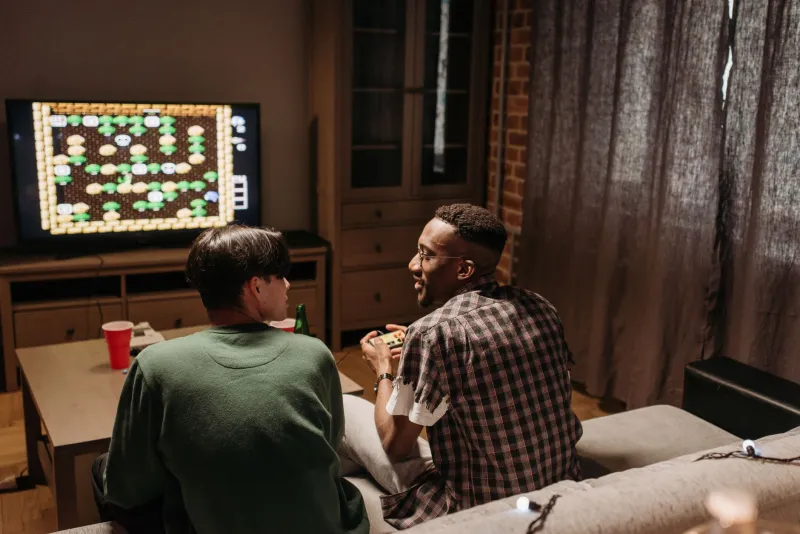
The loneliness epidemic in America isn't a new story. But the gaming industry's response to it — or lack thereof — is worth examining closely. While US studios kept optimizing for competition, ranked ladders, and solo hero narratives, Asian developers were quietly building something different: games where the whole point is finding your people and sticking with them.
It's not a small trend. It's becoming one of the defining splits between Eastern and Western game design philosophy, and US players are voting with their time in ways that should make Western studios genuinely uncomfortable.
Beyond the Dating Sim Label
When most American gamers hear "relationship-building game from Asia," their brain goes immediately to dating simulators — a genre that carries a certain stigma in Western gaming culture despite being enormously popular. But the category of Asian games built around human connection is so much broader than that, and collapsing it all into "dating sim" misses the actual cultural phenomenon happening.
Games like Story of Seasons and Rune Factory — Japanese franchises with decades of history — are fundamentally about building a life inside a community. You farm, yes. But you also learn the schedules of your neighbors, remember their birthdays, show up when they're struggling, and earn trust over time. The relationship mechanics aren't a side feature. They're the architecture the entire game is built on.
Korean MMOs have long incorporated guild systems and social rituals that go far beyond what Western equivalents offer — not just in terms of mechanics, but in terms of cultural expectation. In many Korean gaming communities, your guild is your community in a way that feels closer to a real social network than a game feature.
Chinese mobile games, meanwhile, have pioneered companion systems so sophisticated that players form genuine emotional attachments to AI-driven characters — and the studios design those systems intentionally, not as a monetization trick, but as a core experience.
What the Pandemic Exposed
COVID-19 didn't create loneliness in America. It just made it impossible to ignore. When physical social infrastructure collapsed overnight, people turned to games — and what they found was revealing.
Competitive multiplayer games, which had dominated Western gaming culture for years, suddenly felt exhausting in a way they hadn't before. The toxicity of anonymous online lobbies, always present, became unbearable when gaming was one of the only social outlets available. Players started leaving. Burnout spiked. The discourse around "toxic gaming communities" reached a new intensity.
At the same time, games like Animal Crossing: New Horizons — a Nintendo title deeply influenced by Japanese design sensibilities around community and gentle social interaction — sold at a pace that shocked even Nintendo. People weren't just playing it. They were using it as a meeting place, a social space, a way to stay connected to people they couldn't see in person.
The lesson was right there. Plenty of people absorbed it. Western studios, largely, did not.
The Design Philosophy Behind Connection
What Asian developers understand that Western studios keep underestimating is that genuine connection in games requires time and intentionality. You can't manufacture belonging with a ping system and a quick-play matchmaking queue.
Games designed around companionship tend to share certain structural qualities. They slow down. They create recurring rituals — daily check-ins, seasonal events, small ceremonies that players perform together and look forward to. They give players reasons to show up for each other rather than just competing against each other.
Japanese developer Acquire's Shining Resonance series builds party dynamics where characters have overlapping relationships, histories, and emotional needs that shift based on player choices. You're not just building a combat team — you're managing a found family. The distinction matters, because it changes how players relate to the experience emotionally.
Taiwanese studio Red Candle Games, known for darker narrative titles, has still embedded community and trust mechanics into games where the social fabric of a small world feels fragile and worth protecting. The emotional weight of those relationships is the point.
Why Western Studios Keep Missing It
The cynical answer is money. Competitive multiplayer games with live service models and battle passes are easier to monetize than slow, relationship-focused games where the primary reward is emotional rather than transactional. Western studios have optimized for metrics that friendship simulators don't produce in the same way.
But there's also a cultural dimension. American gaming culture has historically valorized individual achievement — the lone hero, the mechanical skill gap, the ranked climb. Games built around collective wellbeing and shared belonging don't fit that narrative cleanly. They've been dismissed as "casual" or "not real games" by a critical establishment that has slowly, grudgingly, had to update those assumptions.
The players moved faster than the critics. The numbers on Stardew Valley — developed by one person drawing heavily on Japanese farming sim traditions — made the argument that relationship-focused games had a massive, underserved US audience. That game has sold over 20 million copies. It is not a niche product.
The Players Who Found Home
Talk to US players who've built their social lives around games like Final Fantasy XIV — a Japanese MMO with one of the most intentionally welcoming communities in online gaming — and you'll hear a consistent story. These aren't people who wanted to be competitive. They wanted to belong somewhere.
FFXIV's design, particularly after its famous relaunch as A Realm Reborn, prioritized community health in ways that Western MMOs rarely do. The development team actively cultivated a culture of inclusion. The result is a game where players regularly describe their Free Company — the guild equivalent — as one of their most meaningful social relationships.
For isolated US players navigating post-pandemic life, that's not a small thing. That's a lifeline.
Asian developers didn't stumble onto this by accident. They built toward it deliberately, drawing on cultural frameworks where community obligation, mutual care, and shared ritual are values worth designing around. The US market didn't create those games. But it desperately needed them.
And now that it's found them, it's not letting go.