Homework Who? How Asian Educational Games Are Making US Kids Actually Beg to Study
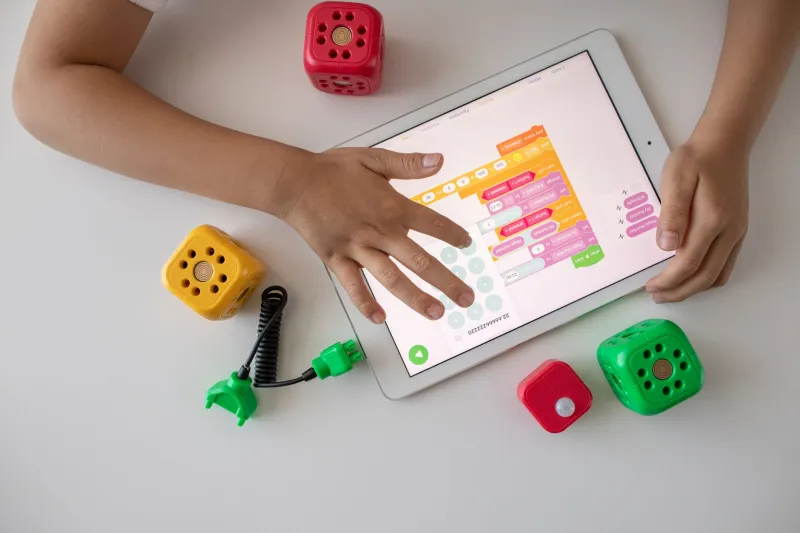
Something weird is happening in living rooms across the US. Kids who refuse to open a textbook are voluntarily spending two, three, sometimes four hours on games that are — quietly, sneakily — teaching them algebra, reading comprehension, and even a second language. Their parents aren't complaining. Their teachers are taking notes. And the studios behind these titles? Almost all of them are based in Japan, South Korea, or China.
Western edtech had a two-decade head start. Somehow, Asian developers still lapped them.
The Problem With "Educational" as a Genre
For a long time, educational games in the US were basically worksheets with a loading screen. Think early-era Leapfrog titles or the endless parade of classroom-approved apps that looked like they were designed by a committee who'd never actually watched a kid play a game. The formula was simple and wrong: take a subject, slap a cartoon mascot on it, and call it engagement.
Kids saw through it immediately. The moment something felt like school, they were out.
Asian studios approached the problem differently. Instead of dressing up education as a game, they built actual games that happened to require learning to progress. The distinction sounds subtle. In practice, it's everything.
Take DragonBox (originally Norwegian but widely adopted and iterated on across Asian markets), or look at how Japanese mobile title Gakken's Kodomo Challenge series has been quietly dominating early childhood learning in Asia for years. The core design philosophy: the skill you're building is the mechanic. You don't solve math problems to unlock the fun part. Solving the math problem is the fun part, because the game is structured around it.
Games That Actually Work — And Why
Let's get specific. Prodigy Math, while Canadian, borrowed heavily from the JRPG combat loop that Japanese studios perfected — a battle system where winning requires answering curriculum-aligned questions correctly. US teachers started recommending it because kids were asking to play it at home. That's not an accident; that's borrowed design language from games like Dragon Quest and Final Fantasy, franchises that trained generations of Japanese kids to engage with stat management and strategic thinking without ever calling it math.
Then there's MonkeyWord and the broader ecosystem of Korean vocabulary-building apps that gamify language acquisition through card-collecting mechanics lifted straight from trading card game culture — a format that's enormous across East Asia. Kids collect, trade, and battle with vocabulary cards. The dopamine loop is identical to opening a pack of Pokémon cards. Except instead of a holographic Charizard, you get a working vocabulary in Mandarin or Korean.
Middle school teacher Renata Osei in Atlanta put it plainly: "I stopped fighting it. My students were spending their weekends on these Korean learning apps. I asked them why, and one kid said, 'Because it feels like I'm getting stronger.' That's a video game mentality applied to education. It works because they want to level up."
Why Western Edtech Missed the Memo
The failure of American educational technology isn't a budget problem. Companies like Duolingo (which, to its credit, has started borrowing Asian gamification principles aggressively) and Khan Academy have had enormous investment and cultural goodwill. The issue is philosophical.
US edtech was built by educators trying to make education palatable. Asian educational games were built by game designers who happened to care about learning outcomes. That's a fundamentally different starting point, and it produces fundamentally different products.
In Japan, the concept of ikigai — finding purpose and joy in what you do — runs deep culturally, and it shows up in how Japanese studios approach skill-building games. The goal isn't to trick kids into learning. It's to find the version of a subject that is genuinely, intrinsically interesting, and build outward from there.
Korean studios, meanwhile, have been refining mobile game engagement loops for over a decade in one of the world's most competitive mobile markets. When those same studios turn their attention to educational content, they bring battle-tested mechanics for keeping users coming back daily, tracking progress in satisfying ways, and making small wins feel enormous.
What US Classrooms Are Actually Doing With This
Forward-thinking educators across the country are quietly building curricula around Asian-designed titles. Elementary schools in California and Texas have begun incorporating Japanese logic puzzle apps — think digital versions of Nonogram or Picross — into their critical thinking units. The results, teachers say, are hard to argue with.
"The engagement is just different," said Marcus Webb, a fifth-grade teacher in Houston who started using a Japanese-designed pattern recognition app last year. "These kids are problem-solving for forty-five minutes without complaining. That doesn't happen with anything else I put in front of them."
Parents are noticing too. Homeschool communities on Reddit and Facebook have entire threads dedicated to sourcing Asian educational games for kids who've burned out on Western learning platforms. The consensus is consistent: the Asian titles feel like games. The Western ones feel like homework.
Where This Goes Next
The gap isn't closing on its own. Western edtech companies would need to fundamentally rethink their design process — starting with game designers rather than curriculum writers — to produce anything competitive with what's already coming out of Tokyo, Seoul, and Shanghai.
In the meantime, US parents and teachers who've figured out the workaround are sharing it aggressively. Discord servers, parenting forums, and teacher Facebook groups are full of recommendations for Asian-designed titles that American kids are genuinely choosing to play.
For a generation that grew up with infinite entertainment options, "choosing to play" is the only metric that matters. Asian educational game studios figured that out. The rest of the industry is still catching up.