Insert Coin, Find Your People: Asian Arcade Culture Is Hitting US Cities Hard
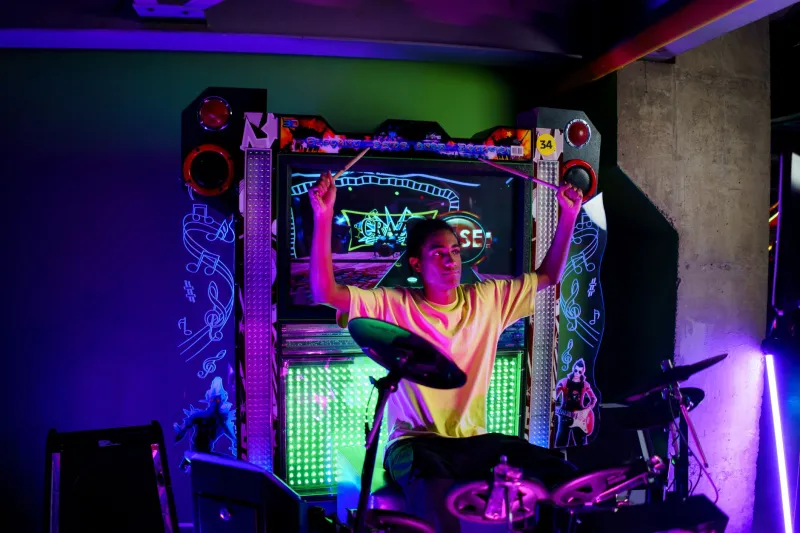
Walk through certain neighborhoods in Los Angeles, Houston, New York, or Seattle right now and you might stumble into something that doesn't quite fit your mental image of 2025. Rows of glowing cabinets. The mechanical thud of taiko drums. Teenagers clustered around a crane game, phones out, absolutely not playing anything on those phones. A line forming for a rhythm game that requires you to tap, slide, and spin a physical controller in ways that look almost choreographic.
Asian arcade culture has arrived in the US — and it didn't come quietly.
Not Your Dad's Pizza-and-Tokens Joint
Let's get one thing straight: the Asian arcade experience is fundamentally different from the Dave & Buster's model most Americans grew up with. It's not about redemption tickets or skee-ball. It's about precision, community, and a physical gaming experience that a console or phone simply cannot replicate.
Japanese arcades in particular have spent decades perfecting a format that's part entertainment venue, part social hub, part competitive arena. Games like Taiko no Tatsujin, maimai, and Sound Voltex require players to develop real physical skills over dozens or hundreds of hours of play. There's a progression system, but it lives in your muscle memory rather than a stats menu. Korean arcades have their own flavor — often blending rhythm games with crane machines, photo booths, and competitive fighting game setups that draw serious players.
These aren't casual spaces. They're venues where gaming is taken seriously as a physical and social activity. And that's a big part of why they're resonating with US audiences who are increasingly exhausted by the isolation of at-home gaming.
The Cities Where It's Happening
The resurgence is most visible in cities with large Asian-American communities, but it's spreading well beyond those demographics. In Los Angeles, venues modeled on Japanese game centers have opened in multiple neighborhoods, drawing lines on weekends that rival popular restaurants. In Houston, Korean-influenced entertainment complexes combining arcade cabinets with food and photo experiences have become genuine social destinations.
New York's scene is particularly interesting because it's layered — you've got dedicated rhythm game venues in Koreatown drawing competitive players, but you also have pop-up arcade events in Brooklyn and Queens where the vibe is more casual discovery. Younger players who grew up entirely in the digital era are encountering physical arcade gaming for the first time and responding with genuine fascination.
Seattle and the San Francisco Bay Area, with their strong ties to Asian tech culture, have seen similar growth. The common thread across all these cities: these spaces are consistently packed, and the demographic mix is broader than anyone expected.
Why Now? The Digital Fatigue Factor
Timing matters here. The arcade comeback is happening at a specific cultural moment when a lot of Americans are quietly questioning their relationship with screens. Not in a dramatic, delete-your-apps way — more in a low-level, background dissatisfaction with the frictionlessness of everything.
Online gaming is infinitely accessible and also, often, deeply unsatisfying. You can play with strangers across the world and still feel completely alone. The physical arcade inverts that equation. You're in a room with people who share your interest. You can watch someone absolutely nail a rhythm game run and feel genuine awe. You can embarrass yourself in front of strangers and laugh about it. The social texture is completely different.
Asian arcade culture has always understood this. The Japanese game center is designed as a community space first and a gaming venue second. That philosophy is translating directly to what US venues are building, often with explicit guidance from Japanese and Korean operators who are either partnering with US businesses or opening their own locations.
The Gen Z Discovery Angle
Here's the part that surprises people: a huge portion of the new US arcade audience has never experienced arcade gaming in any form. Gen Z players who grew up on mobile and console are walking into these spaces with zero nostalgia and coming out converted.
For them, the appeal isn't about remembering something. It's about discovering something that feels genuinely different from their existing gaming life. A rhythm game that requires physical coordination, that you can only play here, that has a community of local regulars who will cheer you on — that's a novel experience for someone whose entire gaming life has been mediated through a screen at home.
Social media is accelerating this. TikTok and Instagram are full of clips from US Asian arcade venues — someone landing a perfect run on a rhythm game, a satisfying crane game win, the aesthetic of the spaces themselves. These clips travel and they drive foot traffic in ways that traditional advertising never could.
How This Is Influencing US Game Design
The impact isn't staying contained to physical venues. The design philosophies embedded in Asian arcade culture — skill-based progression, social performance, physical engagement — are starting to show up in US-developed games and gaming products.
The rhythm game genre, long dominated by Asian developers, is seeing renewed interest from Western studios. More importantly, the concept of games as social physical experiences is influencing everything from VR development to the design of gaming cafes and bars across the country.
US game designers who've spent time in Japanese or Korean arcades talk about them as formative experiences — places where you see what gaming can be when it's built around community and physical presence rather than individual at-home consumption.
The Bigger Picture
The Asian arcade comeback in US cities is about more than nostalgia or novelty. It's a response to something real: the growing sense that digital-only gaming, for all its convenience, has stripped something important out of the experience.
These spaces offer what an online lobby never can — the feeling of being in a room with people who care about the same thing you do, competing and cheering and occasionally making eye contact with a stranger over a shared moment of gaming absurdity.
Asian arcade culture figured that out a long time ago. America is just now catching up.