The Pity Trap: How Gacha Games Are Engineered to Empty Your Wallet Faster Than Any $70 Console Title
Let's be honest for a second. You downloaded Genshin Impact because it was free. Maybe you told yourself you'd never spend a dime. Then a limited-time banner dropped, your favorite character was on it, and suddenly your credit card was doing things your budget did not approve of. Sound familiar? You're not alone — and you're definitely not weak-willed. You've just been on the receiving end of some of the most carefully engineered spending psychology in modern entertainment.
Asian mobile and PC gacha games have quietly become a financial phenomenon that dwarfs traditional console releases. miHoYo's Genshin Impact alone has pulled in over $4 billion in lifetime revenue. Nexon's titles consistently top mobile charts across Southeast Asia and the US alike. These aren't accidents. They're systems — elegant, ruthless, and built from the ground up to make spending feel not just acceptable, but necessary.
What Even Is a Gacha, and Why Should You Care?
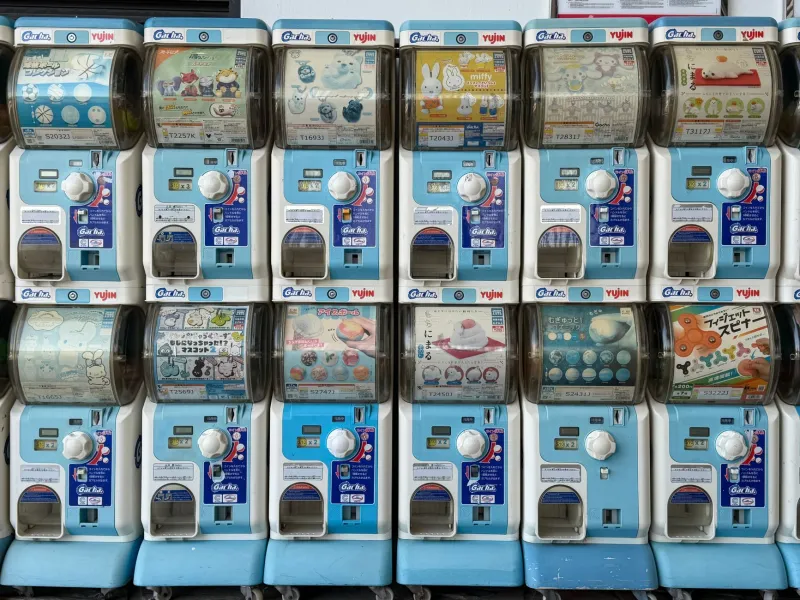
For the uninitiated: gacha is a monetization model borrowed from Japanese capsule toy machines. You spend in-game currency — usually purchased with real money — for a randomized chance at characters, weapons, or gear. The term comes from the sound those little toy machines make. Cute origin, brutal execution.
The model originated in Japan and exploded across South Korea and China before landing squarely in the US market. Games like Fate/Grand Order, Arknights, Honkai: Star Rail, and Blue Archive have millions of active American players. And every single one of those players is operating inside a system designed by behavioral economists, UX researchers, and psychologists who understand how humans make decisions under uncertainty.
The Pity System: Generosity as a Leash
Here's where it gets clever. Most major gacha games include what's called a "pity" mechanic — a guaranteed rare pull after a certain number of attempts. In Genshin Impact, you're guaranteed a five-star character within 90 pulls. In Honkai: Star Rail, it's 90 as well, with a soft pity kicking in around 74.
This sounds consumer-friendly. And it is — partially. But what the pity system actually does is set a ceiling on how much you need to spend, which paradoxically makes spending feel safer. Instead of gambling with no end in sight, you're gambling with a known worst case. That psychological safety net removes the hesitation that would otherwise stop a rational person from opening their wallet.
What makes it worse? Pity often doesn't carry over between banners. So that 60-pull headstart you had? Gone when the next limited banner drops featuring the character you actually wanted. You're back to zero, staring down a 90-pull potential commitment all over again.
Limited Banners: The Scarcity Engine
FOMO — fear of missing out — is the engine that keeps gacha spending running. Limited-time character banners are available for roughly three weeks before they rotate out, sometimes indefinitely. Studios like miHoYo are careful about reruns; some characters go over a year before returning to the banner pool.
This creates a ticking clock pressure that no $70 console game can replicate. When you buy a copy of Spider-Man 2, it's sitting on your shelf or in your library whenever you want it. But Hu Tao's banner? She's leaving in 12 days. The game isn't just competing for your money — it's competing with your calendar.
Nexon has been especially aggressive with this model in games like MapleStory and KartRider, deploying event-exclusive cosmetics and characters that vanish permanently. Western players have started tracking banner schedules the way people track concert ticket drops. That level of cultural integration is worth billions.
Battle Pass Psychology: Making $10 Feel Like an Investment
Most major gacha titles also layer a battle pass system on top of the gacha itself. At $5 to $10 a month, these passes feel almost insultingly cheap compared to a full console game. And that's the point.
Once you've bought a battle pass, you've crossed the psychological barrier from "free player" to "paying player." Research in behavioral economics calls this the sunk cost effect — once you've invested even a small amount, you're more likely to continue investing to justify the original spend. You bought the pass, so now you need to log in daily to maximize it. You're logging in daily, so now you're watching the banner timer. You're watching the banner timer, so now you're thinking about topping up your primogems.
It's a funnel, and it's a good one.
Why Are Western Players Defending This?
Here's the part that surprises a lot of people: American players have increasingly become vocal defenders of gacha monetization, especially when compared to AAA practices like $70 base prices, day-one DLC, and loot boxes in paid games. And honestly? The argument isn't entirely wrong.
Gacha games typically offer hundreds of hours of free content. The base experience in Genshin Impact is genuinely free and genuinely massive. You can play for years without spending a cent. That's a different value proposition than paying $70 for a 12-hour campaign.
The community framing around gacha spending has also shifted. "Whaling" — spending heavily — is often treated as a personal choice that supports developers you love, not a predatory trap. Streamers who spend thousands on pulls are celebrated, not criticized. The spending is gamified and social in a way that buying a season pass never was.
The Bottom Line
None of this means gacha games are evil. Some of the best gaming experiences available right now run on these models. But it's worth understanding what you're dealing with before you tap that "Top Up" button. The pity system, the rotating banners, the cheap battle pass — every piece of this architecture was designed with a specific behavioral goal in mind.
Asia's biggest gaming companies didn't build billion-dollar franchises by accident. They built them by understanding human psychology better than most Western studios ever bothered to. Whether that's something to admire or something to watch out for probably depends on how your bank account is looking right now.