Cool Is a Design Choice: How Anime-Influenced Characters Are Making Western Game Heroes Feel Like Cardboard
Let me paint two pictures. In one corner, you've got a grizzled, stubble-faced white guy in tactical gear, voice like a gravel driveway, backstory involving dead family members. In the other corner, you've got Ryuji Sakamoto from Persona 5 — loud, impulsive, loyal to a fault, dressed like he designed his own aesthetic, and somehow more emotionally resonant than any character in a $200 million production.
One of these characters has a dedicated global fanbase that still makes fan art, cosplay content, and tribute videos almost a decade after release. The other one gets forgotten before the credits finish rolling.
This isn't just a matter of taste. It's a design philosophy gap that Western studios are only now starting to reckon with, and Asian developers — particularly those rooted in anime and manga visual traditions — have been winning this race for years without much competition.
The Hyperrealism Trap
Western AAA development has been locked in a graphical arms race since the early 2000s, and for a long time, that made sense. Each console generation brought new horsepower, and studios wanted to show it off. Characters got more detailed, skin pores became visible, facial animations became cinematic. The goal was photorealism, and technically, many studios achieved it.
The problem? Photorealism and personality are not the same thing. A character can look like a real human being and feel like nobody at all.
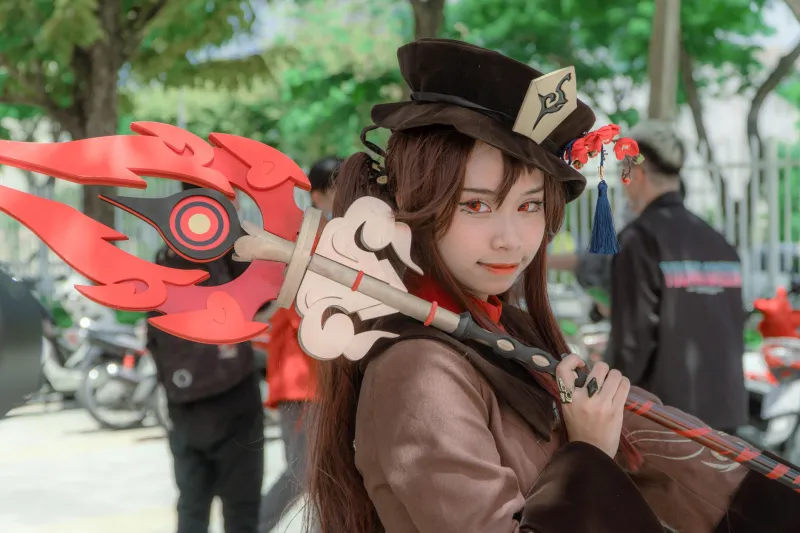
Anime and manga design traditions operate from a completely different set of priorities. Exaggerated expressions, bold silhouettes, distinctive color palettes, and stylized proportions aren't limitations of the medium — they're intentional tools for communicating personality at a glance. You can identify Genshin Impact's Hu Tao from fifty feet away at a convention. Can you say the same for the protagonist of the last open-world Western RPG you played?
What Genshin Impact Actually Got Right
When Genshin Impact launched in 2020, a lot of Western gaming commentators dismissed it as a Breath of the Wild clone with gacha mechanics. What they missed was the character design language, which turned out to be the game's most durable competitive advantage.
miHoYo's character designers don't just create characters — they create identities. Every Genshin character comes with a defined color palette, a silhouette that reads clearly at any size, a personality that's communicated through their idle animations, and a visual motif that ties their appearance to their lore. Zhongli looks ancient and immovable. Venti looks free and a little chaotic. Raiden Shogun looks like controlled power barely contained in human form.
None of this happened by accident. It happened because the studio treats character design as a core product feature, not an aesthetic afterthought. The result is a roster of characters that players form genuine emotional attachments to — attachments strong enough to drive billions in revenue from people spending money specifically to "pull" their favorite character.
Persona and the Power of Personality-First Design
Atlus's Persona series deserves its own conversation here because it represents something slightly different: the fusion of anime visual language with deeply Western-influenced storytelling structures, packaged for a global audience.
Persona 5's cast doesn't just look cool. Each character's visual design is a compressed statement of their psychological arc. Joker's red gloves and long coat communicate rebellion and theatricality before he speaks a single line. Ann's design reflects her dual nature — the performative exterior and the genuine person underneath. Every design choice is doing narrative work.
This is manga-school character philosophy applied to game development: the idea that a character's appearance should tell you something true about who they are. Western studios often reverse this, designing characters first for realism and then retrofitting personality through dialogue and cutscenes. The result is characters who feel explained rather than felt.
The Cosplay Test
Here's an informal but surprisingly reliable metric for character design quality: the cosplay test. If a character inspires people to spend hundreds of dollars and dozens of hours recreating their look, that character has achieved something most designs never do — they've become aspirational.
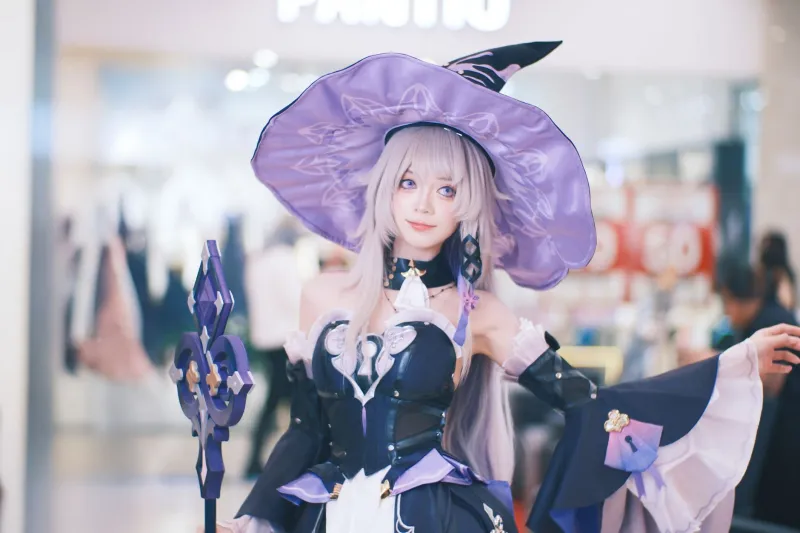
Scroll through any major convention gallery from the last five years. Genshin Impact characters dominate. Persona characters dominate. Characters from Honkai: Star Rail, Blue Archive, Nier: Automata, and Fire Emblem are everywhere. Meanwhile, the protagonists from most Western blockbusters are a small fraction of the floor.
This isn't just about anime fandom demographics. It's about which characters people want to be, even briefly. That desire is rooted in design decisions made at the earliest stages of development.
Western Studios Are Starting to Notice
The influence is visible if you know where to look. Fortnite's most popular skins skew heavily toward anime-influenced collaborations — Naruto, Dragon Ball, My Hero Academia. These crossover events consistently break engagement records. The audience is telling studios something with their wallets, and those studios are listening.
More significantly, some Western developers are deliberately shifting their design philosophy. The character work in games like Hi-Fi Rush shows what happens when a Western studio lets expressiveness and personality lead over photorealism. The game's protagonist Chai is more memorable than most AAA heroes released the same year, and he was built on a design language that owes a clear debt to anime aesthetics.
The Real Arms Race
The graphics arms race is largely over. Most major studios can produce visually stunning environments. The new competition — the one that actually determines whether players remember your game in five years — is personality.
Asian studios, particularly those rooted in anime and manga traditions, have been competing on this front for decades. They've built entire design methodologies around making characters feel like real people with real interiority, expressed through visual shorthand that communicates instantly and sticks permanently.
Western studios that keep chasing pore detail and motion capture fidelity are optimizing for the wrong variable. The players have already voted with their cosplay budgets, their fan art hours, and their banner spending. They want characters worth caring about.
The studios that figure out how to deliver that — regardless of where they're based — are the ones who are going to own the next decade of gaming culture. Right now, the scoreboard is pretty clearly in Asia's favor.