Pain Is the Point: Why Asian Game Designers Are Making Suffering the Best Part
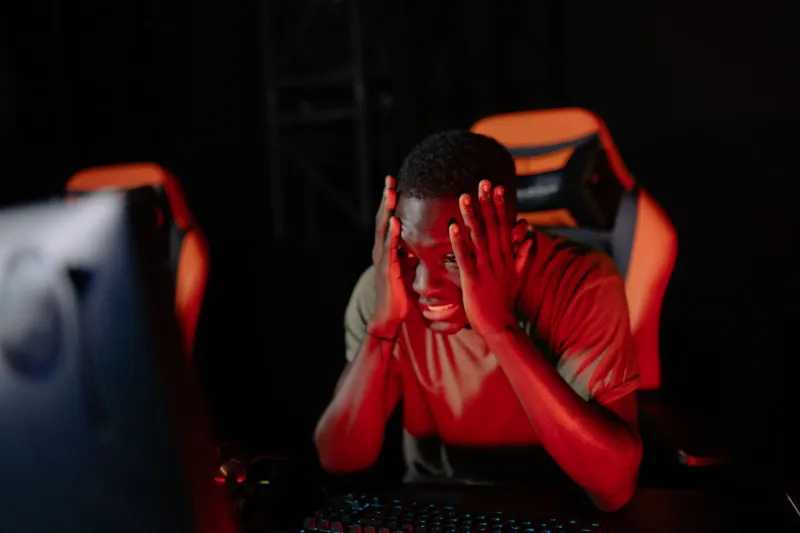
There's a moment every gamer knows. Controller in hand, jaw clenched, you've just died to the same boss for the thirty-seventh time. Your thumbs are sore. Your eyes are dry. You should absolutely close the game and go touch grass. Instead, you hit try again before the death screen even finishes loading.
That loop — that maddening, magnetic pull back into failure — isn't an accident. For a specific breed of Asian game developers, it's the entire product. And right now, American players are paying full price to suffer through it, leaving five-star reviews, and begging for more.
The Philosophy That Broke Western Game Design
For most of the 2000s and early 2010s, mainstream Western game design trended toward accessibility. Difficulty options everywhere. Waypoint markers pointing you to the next objective. Auto-save every thirty seconds. The philosophy was simple: remove friction, keep the player comfortable, sell more copies.
Then Demon's Souls happened. Then Dark Souls. Then an entire generation of American gamers discovered they actually wanted to be punished.
FromSoftware, the Tokyo-based studio behind the Souls series, didn't stumble into a design accident. Director Hidetaka Miyazaki has spoken in interviews about deliberately constructing games around the emotional arc of struggle and eventual triumph — borrowing from a broader Japanese cultural appreciation for shokunin (craftsman) mentality, where mastery is only meaningful if it costs something real. The difficulty isn't decoration. It's the whole point.
This philosophy didn't emerge in a vacuum. Japanese game design has long carried a streak of brutal precision — think the punishing quarter-munchers of 80s arcades, the unforgiving platformers of the Famicom era, the survival horror games where ammo scarcity kept you sweating for hours. Frustration was always baked in. FromSoftware just figured out how to make modern players feel good about it.
Scarcity, Stress, and the Chinese Farming Sim Underground
It's not only action RPGs doing this. Scroll through indie game communities on Reddit or Discord and you'll find a quietly obsessed fanbase around Chinese-developed farming and survival sims that treat resource scarcity like a core mechanic rather than a temporary obstacle.
Games like Stardew Valley — developed by a single American creator — are often cited as the gold standard of relaxing farm life games. But a newer wave of Chinese-developed titles flips that template. Games coming out of smaller Chinese studios introduce brutal seasonal systems, crop failures tied to in-game weather logic, and economic pressures that can unravel hours of progress in minutes. There's no safety net. There's barely a tutorial. You figure it out or you don't.
And American players are going feral for them.
The appeal, according to players who've sunk hundreds of hours into these titles, isn't masochism for its own sake. It's the texture of the struggle. When resources are actually scarce, every decision carries weight. When failure is a real outcome, success means something. The emotional contrast — stress followed by relief, confusion followed by understanding — hits harder than a game that smooths everything out.
The Psychology Behind Controlled Suffering
Game designers and behavioral psychologists have a term for what's happening here: variable ratio reinforcement. It's the same mechanism that makes slot machines addictive — unpredictable rewards create stronger behavioral loops than consistent ones. But what Asian design philosophy adds on top of that is something more nuanced: it ties the variable reward to skill development rather than random chance.
When you finally beat Malenia in Elden Ring after forty attempts, the dopamine hit isn't just about winning. It's about the fact that you got better. Your muscle memory improved. Your pattern recognition sharpened. The game made you a more capable player, and then let you prove it. That's a fundamentally different emotional experience than being handed a win.
Korean MMOs have understood this for years. Games like Black Desert Online build entire progression systems around the grind — gear enhancement systems where failure is common, expensive, and occasionally catastrophic. Western players initially pushed back hard against these mechanics. Now? Enhancement anxiety is practically a genre unto itself, with content creators building entire audiences around the drama of a single upgrade attempt.
Why American Players Are Shifting
Something changed in the American gaming audience over the last decade, and it's worth naming directly. A generation that grew up with participation trophies and infinite lives got older, got bored with easy wins, and started craving something with actual teeth.
There's also a social dimension to it. Struggling through a hard game is content. Watching someone die repeatedly to a boss and then finally nail it is compelling viewing — it's why FromSoftware boss fights dominate YouTube highlight reels and Twitch clip compilations. The suffering is shareable. The triumph is communal. When your whole Discord server is grinding the same brutal dungeon, the frustration becomes a bonding experience.
Asian developers — particularly in Japan, South Korea, and increasingly China — have been building games around that emotional arc for much longer than Western studios. The US market is only now catching up to what Asian players have known for decades: a game that never pushes back isn't really a game. It's an interactive movie with extra steps.
The Design Line Between Challenge and Cruelty
Not every punishing game earns its difficulty. The difference between a well-designed hard game and a badly designed frustrating one comes down to fairness and legibility. The best Asian titles in this space — your FromSoftware catalog, your Hades (heavily influenced by roguelike traditions with deep Asian roots), your Sekiro — make the rules clear even when the execution demands perfection. You die, but you understand why you died. You can fix it.
The games that lose players aren't the hard ones. They're the unfair ones, where deaths feel random, where the game withholds information it should share, where failure doesn't teach you anything. The controlled suffering philosophy only works when the player trusts the designer.
That trust is what the best Asian studios have spent decades building — and what American players are finally extending back.
The Takeaway
Rage quitting used to be the end of the conversation. Now it's the beginning of the next session. Asian game design — rooted in precision, scarcity, mastery, and earned reward — has fundamentally changed what American players expect from a challenging experience. Frustration isn't a flaw to be patched out. It's the feature you paid for.
And honestly? Getting wrecked has never felt this good.