Good Game or Get Wrecked: How Asian Gaming Culture Is Forcing US Online Communities to Grow Up
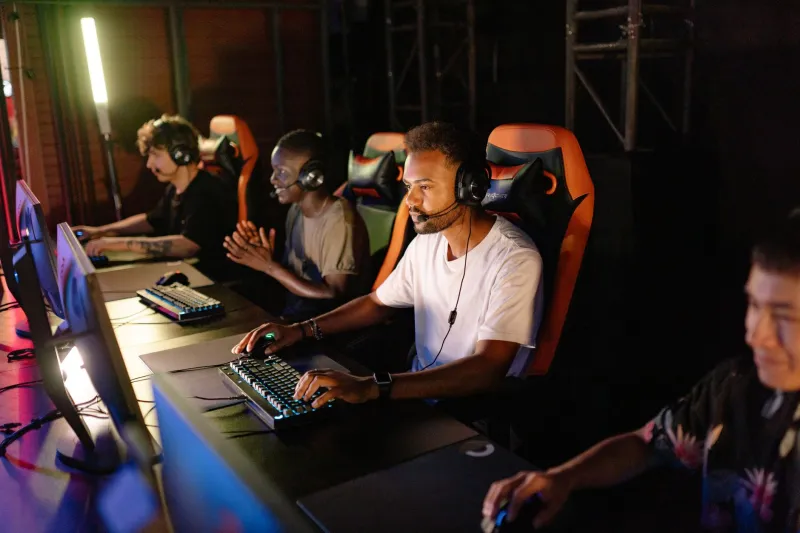
If you've ever dropped into a ranked match in League of Legends or Valorant and immediately watched the chat devolve into a dumpster fire of slurs, blame-shifting, and creative threats involving someone's mother, congratulations—you've experienced the American online gaming experience in its purest form. It's almost a rite of passage at this point.
But spend any real time in Korean PC bang culture, Japanese competitive gaming circles, or even Chinese esports communities, and something feels noticeably different. Not perfect—nowhere close—but different. There's a framework, a kind of unspoken social contract around how you're supposed to carry yourself before, during, and after a match. And as more Asian players, creators, and esports pros flood into US online spaces, that contract is starting to bleed into lobbies that have never had one.
The Rulebook America Never Wrote
Here's the thing about American gaming culture: it grew up fast and largely unsupervised. The internet gave everyone a microphone and basically zero accountability, and competitive gaming inherited all of that energy. Trash talk became a badge of honor. Rage quitting got memed into a personality trait. Flaming your own teammates after a loss? Practically expected.
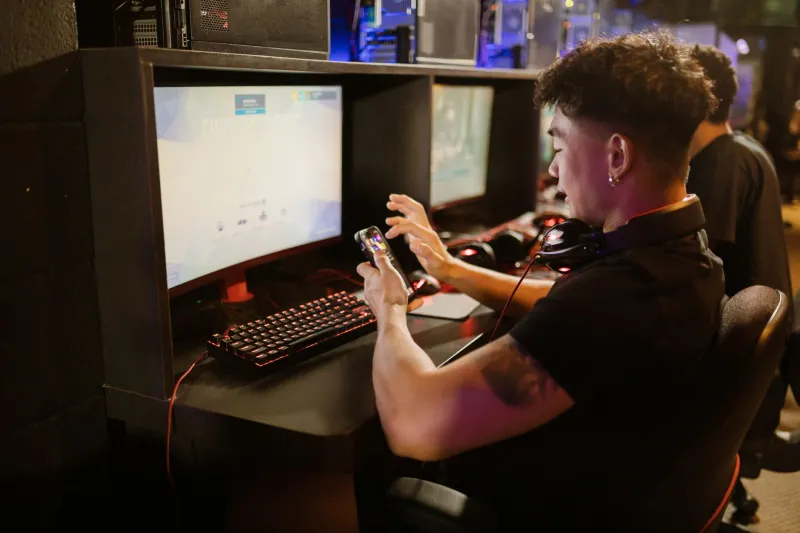
Asian gaming cultures, particularly in South Korea and Japan, developed under tighter social structures. Korean PC bangs—those legendary gaming cafés that basically incubated the country's esports dominance—had real-world social consequences baked into them. You were playing in public, often next to people you knew. Your behavior reflected on you as a person, not just a username. That pressure created habits.
"In Korea, there's a concept of nunchi—reading the room, being aware of how your actions affect the group dynamic," explains one community manager who works with a major esports organization operating across both Korean and North American servers. "That doesn't disappear when you put on a headset. Players carry it into their games."
Japan takes it even further in some respects. Post-match bowing—literal or symbolic—is common in Japanese competitive gaming events. Even in online spaces, the expectation of a courteous "GG" (good game) after a match, win or lose, is treated less like a formality and more like a basic social obligation. Skipping it is genuinely considered rude.
When Two Cultures Share a Server
So what actually happens when these two worlds collide? It's messy, honestly, and it goes both ways.
Some American players interpret Asian players' quieter, more restrained in-game communication style as passive or unengaged. There's a persistent stereotype that Asian teammates "don't call out" or seem reluctant to use voice chat—but a lot of that comes down to cultural comfort, language barriers, and frankly, not wanting to engage with the chaotic energy that US lobbies are known for. Why would you?
On the flip side, some Asian players—especially newer arrivals to US servers—have described culture shock at the volume and aggression of American online spaces. One Korean college student who plays Overwatch 2 on US servers told us he spent his first few weeks muting everyone by default because the constant negativity was genuinely affecting his enjoyment of the game. "In Korean servers, people still flame, but there's a limit," he said. "Here it felt like no one had ever been told to stop."
But the blending is happening whether anyone's ready for it or not. Esports pros who've crossed between regional leagues talk about picking up habits from their time in Asian competitive environments—things like structured post-match reviews, more disciplined communication protocols, and a greater emphasis on team accountability over individual blame.
Stricter Standards Are Actually Working
Here's where it gets interesting from a competitive standpoint: the regions with stricter conduct standards are, broadly speaking, also the regions producing some of the most dominant esports rosters in the world. That's not a coincidence.
Korea's League of Legends scene didn't just produce great mechanical players—it built systems around mental discipline, respect for coaching staff, and a culture of taking losses as learning opportunities rather than excuses to implode. Chinese esports organizations have been criticized for their intensity, but that same intensity comes with a strong emphasis on team cohesion and controlled behavior in competitive settings.
Multiple US esports coaches have started borrowing from these frameworks, implementing conduct standards in their organizations that would have seemed foreign to American gaming culture five years ago. No flaming teammates in scrims. Structured cooldown periods after losses. Mandatory post-match analysis sessions where blame is explicitly taken off the table.
"We basically looked at how Korean orgs structured their practice environments and reverse-engineered parts of it," said one North American esports coach who asked to remain anonymous. "The culture stuff was the hardest to transplant, but it made the biggest difference."
Toxicity Isn't Disappearing—But It's Being Challenged
Let's be real: no culture has fully solved online toxicity. Korean servers have their own problems. Chinese online gaming communities can be brutal in different ways. Japan's more restrained culture sometimes tips into its own kind of social pressure that's unhealthy in different directions. Nobody's holding up a perfect model here.
But what Asian gaming culture does offer—at least in its more constructive expressions—is proof that norms can be enforced, that players respond to social expectations, and that a community can decide, collectively, what kind of space it wants to be.
US platforms and game developers are slowly catching on. Riot Games, Blizzard, and others have ramped up behavioral systems in recent years, partly influenced by how Asian regional servers handle moderation. Honor systems, conduct scores, and post-match rating mechanics all have roots in design philosophies that Asian developers pioneered.
The question isn't whether American gaming culture will keep absorbing these influences—it already is. The question is how fast, and whether the loudest voices in US online spaces will push back hard enough to slow it down.
What the West Can Actually Learn
At its core, this isn't really about Asian culture being inherently superior or American gaming being uniquely broken. It's about what happens when a community decides that how you play matters as much as whether you win.
The "GG" at the end of a match sounds like a small thing. But it's a signal—a tiny, repeated acknowledgment that the person on the other side of the screen is still a person. That's the muscle Asian gaming culture has been building for decades, and it's one that US online communities, for all their energy and creativity, have largely let atrophy.
The good news? Muscles can be rebuilt. And with more Asian players, coaches, and cultural influences flowing into US gaming spaces every year, the workout is already underway—whether American lobbies are ready for it or not.