No Publisher? No Problem: How Asian Indie Devs Are Crashing the US Market on Their Own Terms
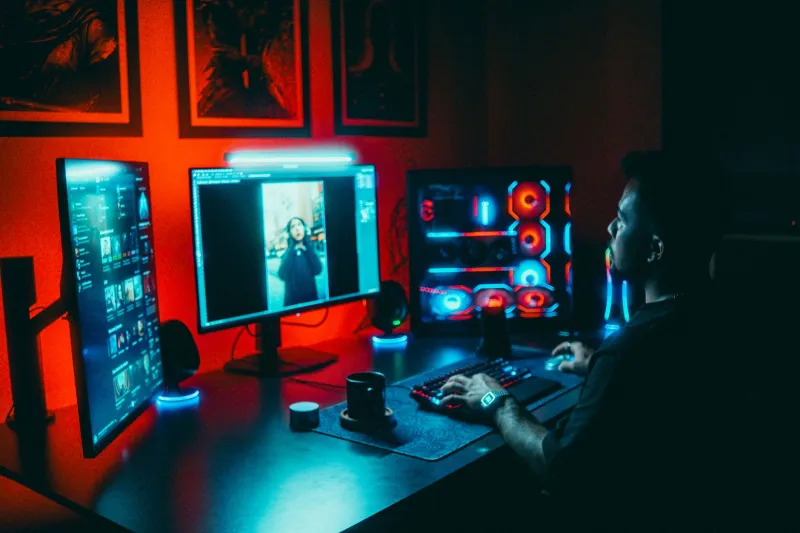
There's a bedroom in Ho Chi Minh City where a 26-year-old named Minh has been building a pixel-art RPG for three years. No publisher backing him. No marketing budget to speak of. Just a Steam page, a TikTok account with 80,000 followers, and a game that hit 10,000 wishlists before he even announced a release date.
Stories like Minh's are becoming less of an exception and more of a trend. Across South Korea, Japan, Vietnam, and Indonesia, a new generation of indie developers is finding ways to reach US audiences without ever shaking hands with a traditional publisher. And it's working — sometimes spectacularly.
The Old Way Is Dead (or at Least Dying)
For decades, breaking into the Western market from Asia meant one thing: find a publisher willing to localize your game, handle distribution, and take a very healthy cut of your revenue in exchange. That system worked for big studios with blockbuster budgets. For a two-person team in Jakarta building a folklore-inspired puzzle game? Not so much.
Platforms like Steam and itch.io changed the math entirely. A developer in Busan can upload a game tonight and have it in front of American players by tomorrow morning. The friction is almost zero. What replaced the old gatekeepers isn't another gatekeeper — it's an algorithm, and algorithms don't care where you're from.
"We never thought the US would be our biggest market," says Yuna, co-founder of a small Korean studio that released a narrative horror game last year. "We made the game in Korean first, added English subtitles ourselves, and just... put it up. The response from American players was bigger than anything we saw domestically."
TikTok Is the New E3
If Steam is the storefront, TikTok has become the trade show. Short-form video has been an absolute game-changer for indie developers who can't afford booth space at PAX or a flashy trailer produced by a marketing agency.
A 30-second clip of a satisfying game mechanic, a time-lapse of pixel art being drawn, or a developer talking candidly about their creative process — these posts routinely pull in hundreds of thousands of views. And unlike a banner ad, they feel personal. American audiences, especially younger ones, respond to authenticity. Watching a developer from Tokyo debug their game at 2 a.m. while lo-fi beats play in the background? That's content that connects.
Several Asian indie titles have gone from unknown to wishlisted overnight purely through TikTok momentum. The platform's algorithm doesn't discriminate by geography — a compelling video from an Indonesian developer competes on equal footing with one from a studio in Austin, Texas.
Localization: The Make-or-Break Factor
Here's where things get genuinely interesting. Localization used to be a massive cost center — hire translators, cultural consultants, voice actors, the works. Smaller studios simply couldn't afford it at a professional level.
Today, many Asian indie developers are taking a more scrappy, community-driven approach. Some release early access versions in English and crowdsource feedback from their player communities to fix translation issues. Others use their social media following to recruit bilingual fans who genuinely love the game and want to help polish the localization.
The results aren't always perfect, but players often don't mind. In fact, there's a growing segment of the US gaming community that actually appreciates when a game's cultural roots feel authentic rather than sanded down for Western sensibilities. A Korean ghost story that keeps its original folklore intact — even if some references require a quick Google — can feel more interesting than one that's been scrubbed clean of anything unfamiliar.
"We kept the Korean honorifics in the dialogue," explains one developer who released a visual novel earlier this year. "We added a small glossary in the settings menu. American players loved it. Some of them said it felt like actually learning something while playing."
What Makes Asian Indie Games Click With US Players
So what's the actual appeal? Why are American gamers gravitating toward indie titles from across the Pacific?
A few things stand out. First, aesthetic. The visual styles coming out of Asian indie studios — whether it's the intricate sprite work of Japanese developers, the bold line art influence of Korean manhwa culture, or the lush, nature-inspired environments from Southeast Asian teams — offer something genuinely different from the dominant Western indie look.
Second, narrative depth. Asian indie games frequently lean into mythology, folklore, and historical settings that feel fresh to US players who've already explored every corner of European fantasy tropes. A game rooted in Indonesian shadow puppet traditions or Vietnamese war history carries a kind of storytelling weight that's hard to replicate.
Third — and maybe most importantly — price point. Many of these titles launch at $5 to $15. For American gamers who've been burned by $70 AAA releases that feel unfinished, a polished 8-hour experience from a small Asian studio for $9.99 is an easy yes.
The Studios to Watch
The pipeline is only getting bigger. Indonesia's indie scene, in particular, has exploded over the last two years, with several studios gaining international attention after their games were featured in Steam's "Hidden Gems" editorial spots. Vietnam is producing a surprising number of narrative-focused titles that punch well above their budget weight class. And South Korea's indie community, long overshadowed by the country's massive mobile gaming industry, is finally getting recognition for its console and PC output.
Japan, of course, has been doing this for years — solo developers like the creator of Cave Story essentially wrote the playbook. But the current wave feels broader and more diverse than ever before.
The Bottom Line
The pipeline from bedroom studio to US audience has never been shorter. What used to require a publishing deal, a localization budget, and years of industry relationship-building can now be accomplished with a Steam account, a TikTok presence, and a game that's genuinely worth playing.
For US players, this is an embarrassment of riches. There's never been more interesting, affordable, culturally distinct gaming content available at the click of a button. The question isn't whether Asian indie games will keep finding American audiences — it's which ones you're going to discover next.
Keep your Steam wishlist ready. The next one might already be uploading.