Die Again, Win More: How Asian Roguelike Designers Turned Permadeath Into the Ultimate Power Trip

Let's be real for a second. Most American gamers were raised on a pretty simple contract: put in the hours, get the reward, beat the game. Checkpoints, save states, difficulty sliders — the industry basically built a safety net under every challenge. So how is it that in 2025, one of the hottest genres in the US market is built entirely around losing everything and starting over?
The answer, in large part, is Asia.
Japanese, Korean, and Chinese studios have spent the last several years quietly perfecting the roguelike formula in ways that Western developers hadn't quite cracked. And now, American players are hooked — not despite the punishing mechanics, but because of how these teams have reframed what failure actually means.
The Old Fear of the Game Over Screen
For a long time, permadeath felt like a punishment reserved for hardcore masochists. Early Western roguelikes — your NetHacks and Angbands — were brutally unforgiving and aesthetically sparse. The genre had a devoted cult following, sure, but mainstream appeal? Not exactly.
Then Supergiant Games dropped Hades in 2020 and everything changed. But here's the thing people often overlook: even Supergiant openly acknowledged borrowing structural DNA from Asian RPGs and action games — the loop-based progression, the narrative drip-feed tied to repeated runs, the way story rewards keep you emotionally invested even when your character just got wrecked by a mid-boss.
Asian studios watched that success and recognized something familiar. Because that design philosophy? They'd been building toward it for years.
Failure as a Feature, Not a Bug
One of the most important shifts Asian roguelike developers brought to the table is rooted in cultural attitudes toward repetition and mastery. In Japan especially, there's a long tradition — in martial arts, in education, in craft — of viewing repeated failure as an essential step in the path to expertise. Game designers from studios like Acquire, Spike Chunsoft, and a wave of indie teams from Tokyo and Osaka have been embedding that philosophy into mechanical design for a while now.
When you die in a game like Touhou: Lost Word spinoffs or dungeon-crawlers built on the Shiren the Wanderer template, the game doesn't frame it as a mistake you made. It frames it as data you collected. You learned the attack pattern. You figured out which item combination doesn't work. The run wasn't wasted — it was a lesson with a respawn button.
Korean developers added their own flavor to this. Studios coming out of Seoul's indie scene, energized by the global success of titles like Dungeon Fighter Online and later roguelike hybrids, leaned hard into the dopamine loop. They understood from years of building live-service mobile titles that players need to feel like something is always moving forward, even in a genre where your character progress resets every run. Persistent unlocks, meta-progression trees, cosmetic rewards — these became structural pillars, not afterthoughts.
The Anime Aesthetic Isn't Just Decoration
Here's something that a lot of Western gaming coverage misses: the visual language of anime-styled roguelikes isn't just a skin slapped on top of mechanics. It's doing real design work.
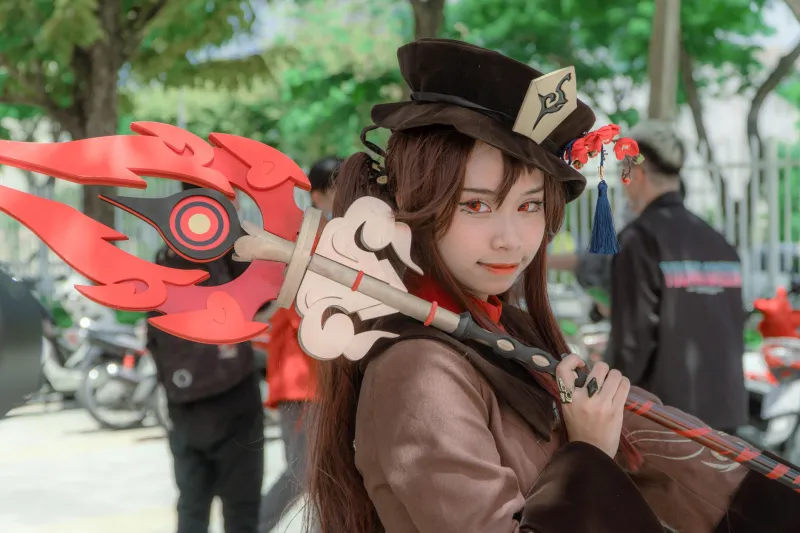
Games like Darkest Dungeon-influenced Korean titles and dungeon-crawlers inspired by shonen manga use character design as an emotional anchor. When your favorite character — the one with the killer voice lines and the gorgeous splash art you've been staring at for three hours — gets wiped out, the loss hits differently than watching a generic sprite disappear. You care. And because you care, you come back.
Chinese developers, particularly mobile-first studios that have been pushing into the PC and console space, have gotten exceptionally good at this. Games like Arknights derivatives and action roguelikes built around gacha-adjacent character systems know exactly how to make you emotionally invested in a roster. Lose a run? Fine. But you're coming back because you want to see what your main character does next.
The Loop Economy
Let's talk about the actual mechanical innovation, because it's real and it's significant.
Asian roguelike designers have become masters of what you might call the "loop economy" — the careful calibration of how long a single run takes, how many meaningful decisions a player makes per minute, and how satisfying the ending of any given run feels regardless of outcome. A bad run that ends in 12 minutes still has to feel like it was worth 12 minutes of your time.
This is harder to pull off than it sounds. Too short and the run feels trivial. Too long and a loss feels devastating in a bad way — the kind that makes you close the app and go watch TV instead. Japanese designers in particular have a track record of nailing this timing, drawing on decades of arcade design culture where every quarter had to deliver value.
The result in 2025 is a generation of roguelikes — many of them developed in Asia, many published by smaller labels without massive marketing budgets — quietly dominating Steam wishlists, App Store charts, and Twitch category pages. Titles like Farplane Zero, Loop Hero-inspired Korean dungeon games, and a flood of anime-adjacent roguelites have found massive US audiences almost entirely through word of mouth and content creator buzz.
What Western Players Actually Get Out of It
So why are American gamers specifically responding to this wave? Part of it is timing — after years of bloated open-world games demanding 80-hour commitments, a tight 20-to-40-minute roguelike run fits neatly into a modern lifestyle. You can play before work. You can squeeze in a run on a lunch break.
But there's something deeper going on too. The roguelikes coming out of Asian studios tend to respect the player's intelligence in a specific way. They don't hold your hand through the learning curve. They trust you to figure things out, and when you do figure them out — when the build finally clicks, when you clear a floor that killed you six times in a row — the satisfaction is enormous precisely because the game didn't make it easy.
American players have been starving for that feeling. And Asian developers, drawing on a totally different design tradition, showed up with exactly what the market needed.
The Genre Isn't Slowing Down
If anything, 2025 looks like the beginning of a longer trend rather than a peak. More Korean and Japanese studios are announcing roguelike projects. Chinese mobile developers are moving aggressively into the PC roguelite space with production values that would have seemed impossible from that market five years ago.
For US players, that means more options, more innovation, and more reasons to embrace the run-and-die loop. The genre that used to be a niche curiosity is now a mainstream staple — and a huge part of that transformation happened because designers from the other side of the world understood something fundamental: losing only feels bad when there's nothing to learn from it. Give players knowledge, give them a reason to care, give them something beautiful to look at while they fail — and they'll keep coming back for more.
Die again. Win more. That's the formula. And Asian studios have it down cold.